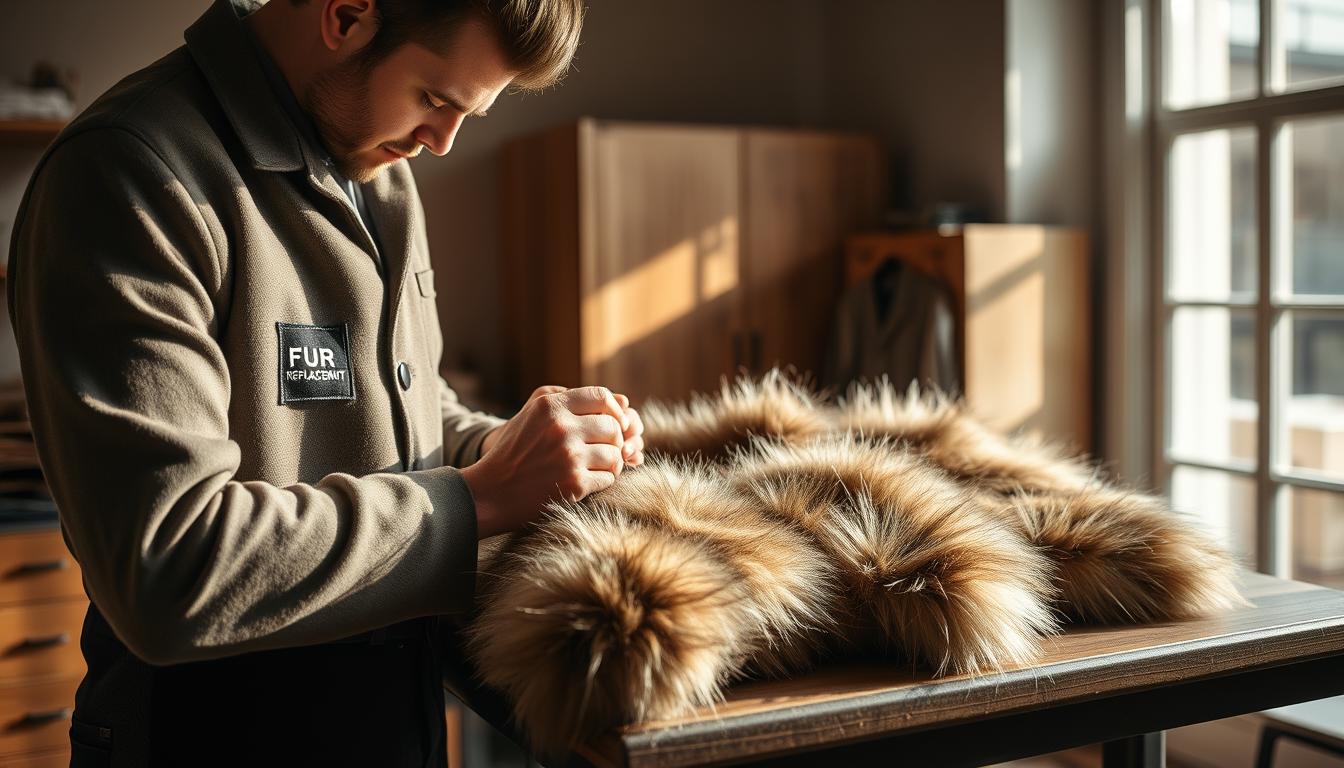
There is a quiet comfort in a well-loved winter coat. You might remember the first time the trim felt full and soft. Over months it can lose that lift. That loss tugs at memories as much as style.
We craft premium FUR REPLACEMENT™ pieces that restore elegance with ethically sourced, cruelty-free materials. Our Scandinavian approach honors texture, durability, and refined detail.
This short guide outlines safe, proven steps. You will learn gentle spot cleaning, careful detangling, and smart heat use that bring back loft without harming fibers. Follow clear strokes, the right tools, and simple dry methods to make fluffy results at home.
For more on caring for outerwear and when to remove detachable trim, see this practical guide from Rinse: winter coat care tips.
Key Takeaways
- Use gentle cleaning and long brushing strokes to protect premium fibers.
- Steam and low heat, kept at distance, restore texture without soaking fabric.
- Detangle with a wide-tooth comb and finish with a soft brush for loft.
- Store trim loosely to avoid compression and loss of shape.
- Our handcrafted replacements match natural look with cruelty-free materials.
What Determines a Fluffy Hood: Fibers, Heat, and Everyday Wear
Several daily forces shape pile and determine loft loss. Friction from zippers, scarves, and seatbelts compresses premium pile. Over time that pressure flattens fine filaments and creates visible matting.
Why faux and fur-replacement fibers matt: friction, moisture, and heat
Faux materials rely on fine filament recovery. Repeated rubbing and tight storage prevent those filaments from springing back.
Heat is especially damaging. Close contact with radiators, hot car interiors, or aggressive drying breaks fiber alignment and speeds tangling. Water alone rarely ruins pile, but water plus pressure or heat can set creases and reduce loft.
The role of heat and water in changing texture and softness
Fabric blends and pile length change outcomes. Shorter piles hide minor matting, while longer piles reveal every bend along the trim edge.
- Daily compression causes the fastest matting—think backpacks pressing on the edge.
- Heat exposure accelerates knotting and deterioration of synthetic fibers.
- Smart care—mild moisture, distance-managed warmth, and gentle handling—preserves texture and resilience.
We craft premium, cruelty-free replacements designed to mirror natural aesthetics and stand up to modern wear. Read care labels before treatment; they guide safe temperature, water exposure, and product compatibility for your fabric and fibers.
Essential Tools and Prep for Safe Hood Care
Good preparation and the right tools make delicate trim care simple and reliable. Gather supplies before you begin and set up a clean, cool workspace away from heat sources.

Brush, comb, and sponge: choosing the right tools
Use a smooth, specialized brush designed for faux fibers. Long, sweeping strokes restore the pile with minimal stress on threads.
A wide-tooth comb helps ease stubborn tangles after brushing. Work in short, gentle passes to protect the pile.
Keep a non-abrasive sponge for spot work. Dab a damp sponge with a mild detergent solution on stains—never soak the surrounding fabric.
Detergent, conditioner, and fabric softener: what to use and avoid
Pick a quality mild detergent made for delicates. Harsh cleaners can roughen fibers and dull the finish.
A small amount of compatible conditioner can improve slip during rinsing. Always test an unseen spot first and follow the garment label.
Use fabric softener sparingly, only when the care label permits. Overuse will weigh down fibers and reduce loft.
- Tip: Lay the coat flat while you work to prevent stretching.
- Keep tools clean to avoid transferring residue back into the pile.
- Avoid direct heat and high-temperature dry-cleaning on light-colored faux pieces.
We recommend investing in premium-grade tools that respect craftsmanship. Quality supplies preserve luxury aesthetics and extend service life.
How to fluff a fur hood: step-by-step methods that bring back softness
These practical steps bring back softness with careful, craft-level attention. Work on one small area at a time and keep tools ready. Move slowly and use minimal moisture.
Step-by-step methods
- Spot clean the area with a damp sponge and mild detergent. Dab—do not soak—then pat dry with a towel and let fibers rest briefly.
- Use brush in long, gentle strokes opposite the matting to lift pile. Follow with a wide-tooth comb for stubborn coils, using low tension.
- If matting persists, apply a steamer at several inches distance. Rotate the steamer and avoid heavy wetting; steam relaxes matted faux fur without harsh heat.
- Air-dry flat, then use a low dryer setting or a blow dryer held well away while you brush. Keep heat controlled to protect fibers and fabric.
- Optional: rinse in cold water with a tablespoon of hair conditioner, then cold-rinse again to remove residue and help make fluffy results.

| Method | Tool | Quick Tip | Risk |
|---|---|---|---|
| Spot clean | Sponge, mild detergent | Dab, avoid seams | Over-saturation |
| Detangle | Brush, wide-tooth comb | Long, opposite strokes | Pulling fibers |
| Steam & dry | Steamer, low blow dryer | Keep distance, rotate | Excess heat collapse |
Final pass: Once dry, brush lightly to align fibers. Repeat small-section methods rather than working the whole piece at once. Patience and controlled heat are the craftsman’s keys to lasting softness.
Long-Term Care: The best way to keep faux fur hoods fluffy
Regular, mindful upkeep keeps premium trims looking fresh season after season. Gentle, consistent care protects craftsmanship and preserves texture without risky treatments.
Storage and handling
Avoid compression and direct heat. Hang the coat on a broad, supportive hanger to keep shoulders and the hood trim from crushing.
- Store in a breathable garment bag; skip plastic covers that trap moisture and flatten fibers.
- Keep pieces away from sunny windows, radiators, and hot dryers.
- Rotate wear and avoid stacking heavy items on the hood during storage or travel.
Quick refresh routine
Between deep sessions, a short weekly pass preserves loft and texture. Lightly brush high-friction zones and shake out the trim after wear.
- If an area looks flat, blot water and air-dry, then brush gently.
- Use the dryer on cool-air only, held at distance, for a brief volume boost.
- Apply a tiny amount of compatible conditioner or fabric softener only when the label permits; overuse will weigh down the fabric.
We advocate mindful maintenance—simple steps that extend life and keep faux fur looking refined season after season.
Conclusion
A careful finish brings restored loft and lasting wear to premium trims.
We believe care should be effortless yet exacting. Gentle spot cleaning with mild detergent, long brush strokes, and wide-tooth combing restore texture. Short steam passes at distance, followed by air-dry and a safe blow dryer pass, revive fibers without damage.
Keep moisture minimal. A cold rinse with a small amount of hair conditioner can refine feel. For heavy matting, repeat brief cycles of steamer work and brushing on small sections. These methods protect fabric and extend coat life.
Discover our handcrafted replacements at FUR REPLACEMENT™, made to pair with your refreshed piece and maintain refined softness.