I still remember the first winter that felt endless — the sting of wind at my neck and the futile search for true warmth. That memory drives our care at FUR REPLACEMENT™. We build handcrafted trims and ruffs that restore comfort and refine style.
Understanding real warmth means looking past labels. Hair density, pelt thickness, and coat construction work together to trap heat.
We explain how hairs per square inch translate into real-world performance, and when premium faux fur or insulated linings make sense. Our products marry Scandinavian design with ethical materials to deliver lasting luxury.
This guide sets clear expectations, shows measurable metrics like hairs per square inch, and points you toward choices that fit your climate, events, and style. Let us help you restore a favorite vest or upgrade a beloved coat without compromise.
Key Takeaways
- Warmth depends on hair density, pelt build, and garment construction.
- Metrics such as hairs per square inch help predict insulation performance.
- High-quality faux fur and premium linings can rival traditional fur coats.
- Design details — collars, hoods, and closures — greatly affect warmth.
- FUR REPLACEMENT™ offers handcrafted, cruelty-free products to restore and elevate garments.
What “warmest fur for a coat” really means in 2025: factors, ethics, and modern options
Warmth today is the result of smart material choices and precise garment build.
Buyers want three outcomes: reliable warmth, lasting comfort, and cruelty-free performance. We balance those priorities with handcrafted trims and premium alternatives rooted in Scandinavian design.
Buyer intent decoded: warmth, comfort, and cruelty-free performance
Factors matter more than labels. Hair density, pelt thickness, and seam work combine to trap air and boost insulation.
We explain simple metrics like hairs per square and square inch so the technical side stays clear. That helps you compare furs available and modern synthetic systems without guesswork.
- Ethics: premium faux fur and handcrafted linings give a luxury look while avoiding animal sourcing.
- Construction: high collars, tight facings, and quality closures reduce air infiltration.
- Weight and comfort: choose materials that offer insulation with minimal bulk for daily wear.
At FUR REPLACEMENT™, we match texture and depth with cruelty-free material choices. This helps you keep the aesthetic of classic fur coats while prioritizing responsible sourcing and practical warmth.
The science of warmth: hairs per square inch, pelt thickness, and construction
Insulation starts at the hair level: density and fiber structure create the still air that does most of the thermal work.
Key factors of insulation include dense underfur, longer guard hairs that trap air, and pelt thickness that resists compression.
- Density metrics: traditional ranges run roughly 20k–60k hairs per square inch. Chinchilla sits near 60k; sable around 40k; Canadian lynx ~25k; red fox ~20k.
- Air trapping: trapped air between underfur and guard hairs provides most insulation. Thickness and loft keep that air in place during movement.
- Construction matters: a construction coat that seals seams, uses insulated facings, and places closures away from wind zones outperforms looser builds.
For extremely cold temperatures, design details change outcomes. High collars, deep hoods, and parka ruffs reduce wind eddies near the face. Mushers favor beaver-lined hats and gloves; canine ruffs handle breath icing better in tunnel hoods.
Practical takeaway: evaluate density (hairs per square and per square inch), pelt thickness, and construction together. Match those factors to your activity and add insulated gloves, hats, and ruffs to protect key heat-loss areas.
Faux fur vs. real fur: can cruelty-free materials keep you warm?
Advances in pile design and backing tech mean ethical alternatives now deliver true thermal performance.
Modern faux fur fibers use engineered pile length and dense knit backings to trap air. That loft creates insulation similar to natural pelts when paired with plush linings.
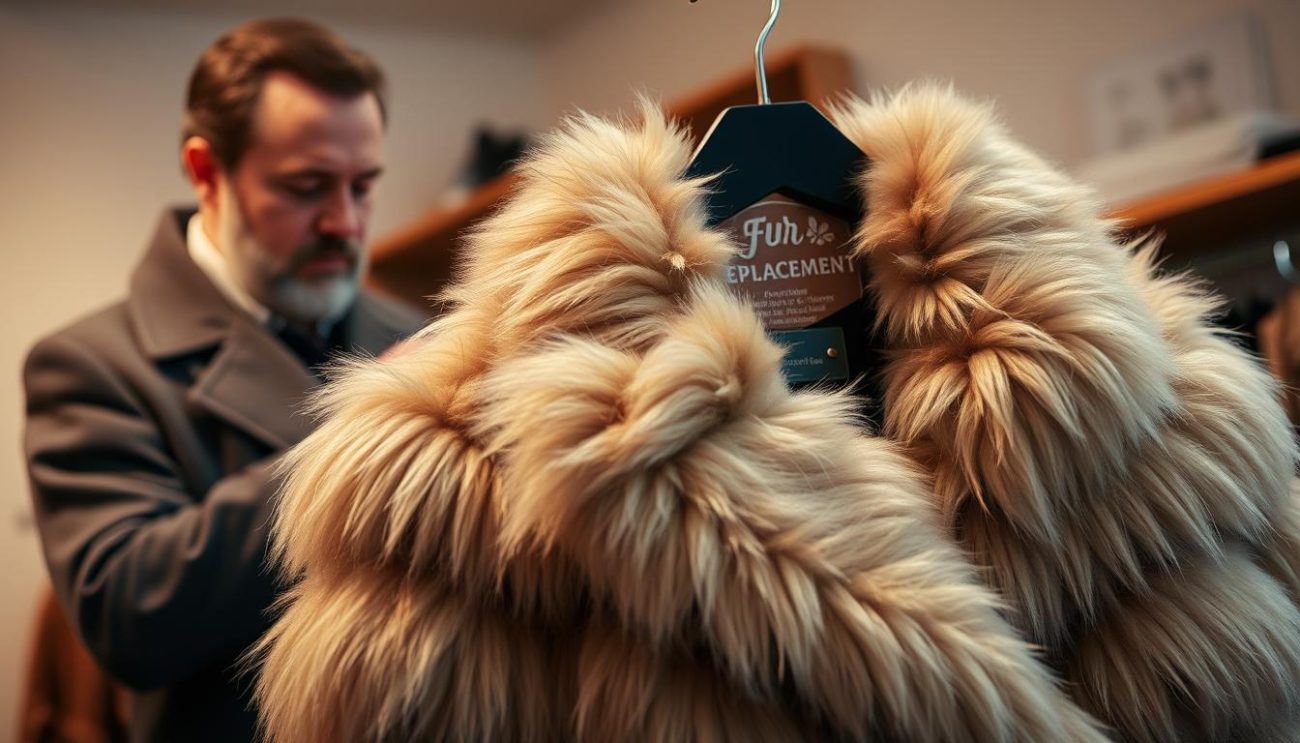
Modern faux fibers and pile construction
High-grade fibers mimic underfur plus guard hairs. They resist compression and keep loft after wear. Brands like Tissavel have shown reliable warmth in below-freezing temperatures.
Why linings and build quality win
Construction matters more than label. Plush interiors, windproof membranes, and sealed closures stop drafts. A well-built construction coat with faux pile often outperforms a loose natural-skin garment.
“Best-in-class faux fur with premium linings can rival down in perceived warmth.”
How faux stacks up to down and fleece
In many builds, faux plus insulated lining equals or beats down on warmth-to-weight. Fleece can lag in extremely cold temperatures without wind protection. Faux handles moisture and care better over time.
| Material | Warmth-to-weight | Wind resistance | Care |
|---|---|---|---|
| Premium faux | High | High (with membrane) | Machine-friendly, low maintenance |
| Down | Very high | Moderate (needs shell) | Requires careful cleaning |
| Fleece | Moderate | Low | Easy care, poor wet performance |
We craft replacements that elevate look, handfeel, and insulation. Explore our premium faux options and see how ethical materials can meet your warmth needs.
How to choose the warmest fur for a coat with FUR REPLACEMENT™
Begin with where you live and what you do outdoors; that drives every material choice.
Match to climate and activity
Match to climate and activity: from San Diego winters to extremely cold events
We start with climate mapping. Mild San Diego cool spells need lighter builds. Blizzards and extremely cold events require high collars, deep hoods, and dense ruffs.
Use-case guide: coats, vests, hats, and gloves for men and women
Choose vest layers to add core insulation without bulk. Men and women benefit from modular accessories that adapt to events and travel.
- Coats: sealed seams and windproof facings for commuting.
- Vests: core warmth for layered systems.
- Hats and gloves: close heat loss at head and hands; paired gloves reduce frost risk.
Fit, size, and weight: balancing thickness, comfort, and durability
Correct size lets insulation loft and trap air. Too-tight sleeves compress underlayers and reduce insulation. Too-heavy weight limits daily comfort in milder winter days.
Material and build recommendations
| Item | Best use | Key feature |
|---|---|---|
| Premium faux fur | Urban winter, travel | Plush lining, low maintenance |
| Fox-style ruff | Windy conditions | Reduces face eddies |
| Beaver-inspired mitts | Field use, extreme cold | Proven warmth and durability |
We guide selection to match activity, temperatures, and style. Our handcrafted replacements refresh favorite garments and add measured insulation without replacing entire wardrobes.
Sizing checklist
- Measure chest and hips with typical layers.
- Allow ease so vest and lining can loft.
- Confirm sleeve and hem lengths to limit drafts.
Conclusion
What keeps you warm is the combination of fiber density, thickness, and precise construction. That synergy beats labels and explains why loft and sealed edges matter more than weight alone.
In practice: choose materials that match your weather and routine. Premium faux fur with plush linings often rivals traditional pelts. For those who prefer real pelts, review density and pelt build when comparing furs available.
In extremely cold or windy conditions, high collars, deep hoods, and targeted accessories improve comfort. Layering remains central when temperatures drop, and sensible weight balances mobility with heat retention.
We invite you to explore FUR REPLACEMENT™—handcrafted, cruelty-free pieces rooted in Scandinavian design. Learn more and share choices at www.fur-replacement.com.