
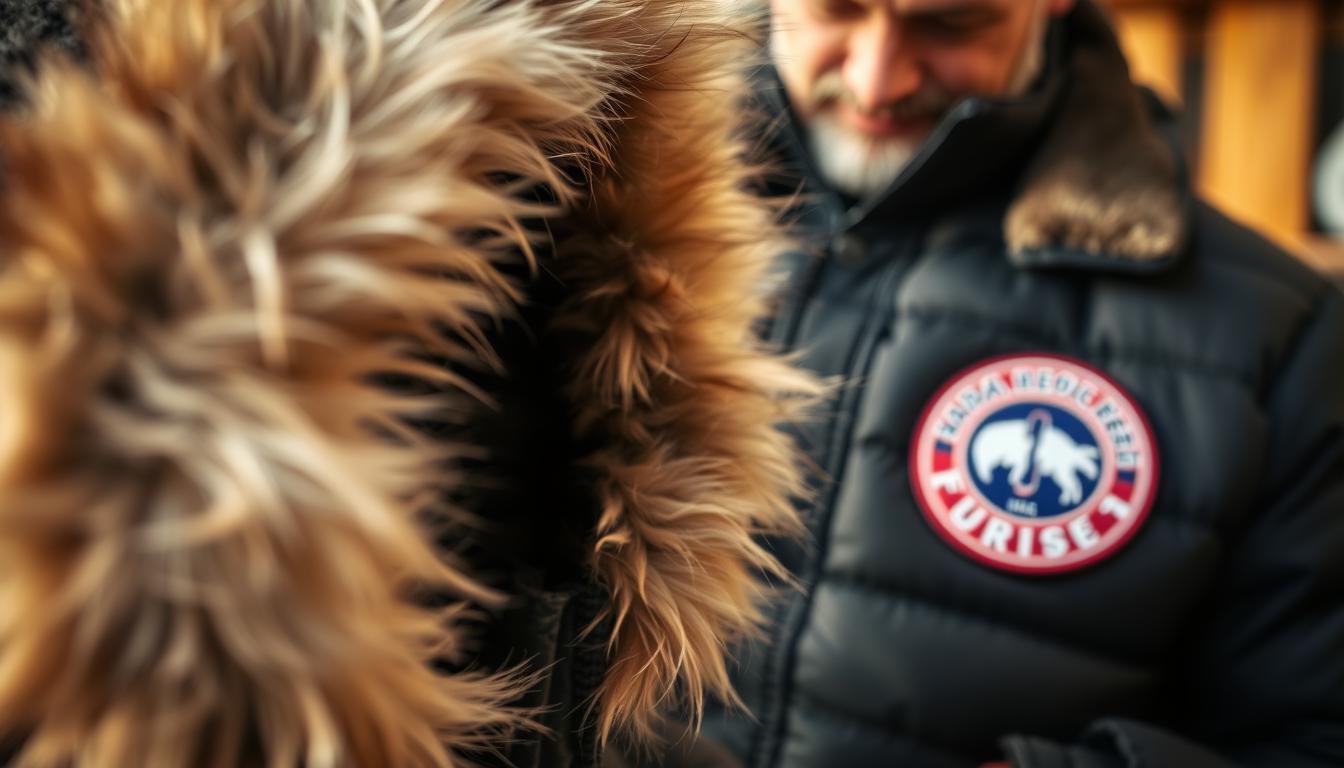
What to check when your Canada Goose fur is shedding
Start with a visual check of the hood trim in good light. Look at where the loose hair came from and whether you can see a thinning patch, a split backing or an opened seam. Avoid pulling on the hair to test it. A photograph and a description of what happened are more useful when you ask for advice.
Check the trim's material label or the information supplied when it was fitted. A second-hand jacket may have a replacement trim, so the jacket brand alone does not identify the material or its care requirements. Keep any instructions for the trim with the garment's care label.
Record the change before trying another treatment
A few loose hairs do not tell you what caused the change. Describe the location and the change you have noticed, including whether it continues during ordinary use. Keep photos from different dates if the affected area seems to be growing.
- Photograph the affected patch and the backing without stretching it.
- Note when you first saw loose hair and whether the appearance has changed.
- List any washing, brushing, heat exposure or cleaning product used before the change.
- Check whether the zipper or another fastening catches near the affected area.
- Record any previous repair and whether the trim is original to the jacket.
These details help the maker or a fur specialist assess the trim. If hair comes away during brushing or the backing looks torn, stop that treatment while you seek advice. Do not keep brushing to find out how much more hair will come loose.
Shedding after rain, cleaning or storage
Tell the person assessing the trim what happened before the shedding started. If it is still wet, follow its own drying instructions and read the checks for Canada Goose fur after rain. Avoid adding a cleaner or another treatment when the cause is unclear.
For tangled hair, use the matted-fur assessment to distinguish the visible condition you need to describe. Trying to pull apart a resistant knot while hair is coming away makes an inspection harder. Leave the area for someone who can assess the material and backing.
Canada Goose's product-care guidance directs owners to the garment label and says to remove a detachable fur ruff before a down-filled parka is dry cleaned. Give the cleaner separate information about the trim and its shedding. Instructions for the jacket shell or down filling do not establish a treatment for the fur.
What to ask about repair
Ask whether the person inspecting it handles the trim's material and can assess both the backing and the fastening. Request an explanation of the proposed work and what result is realistic. Photos can start that conversation; the specialist may need to see the item before deciding.
Check the price, expected timing and what you should send before posting any garment or trim. If the item may be covered by its maker's warranty, ask the maker about the proposed work first. This article cannot determine coverage or a repair outcome for your item.
When to consider a replacement trim
If an assessment finds that the trim cannot be repaired, or it is missing, check the Canada Goose fur trim replacement collar for material, current price and fit options. A new trim still needs to match the attachment on your own hood.
Check the garment's fastening separately. A replacement collar will not repair a damaged zipper half on the hood. Use the attachment measuring guide to prepare your model, size and measurements before asking about compatibility.
Can a care product stop shedding?
Do not assume a cleaner, conditioner or grooming tool will stop hair loss. Ask the trim's maker which treatment, if any, is suitable for the condition you have described. The advice should identify the material it applies to and any reason to stop using it.