
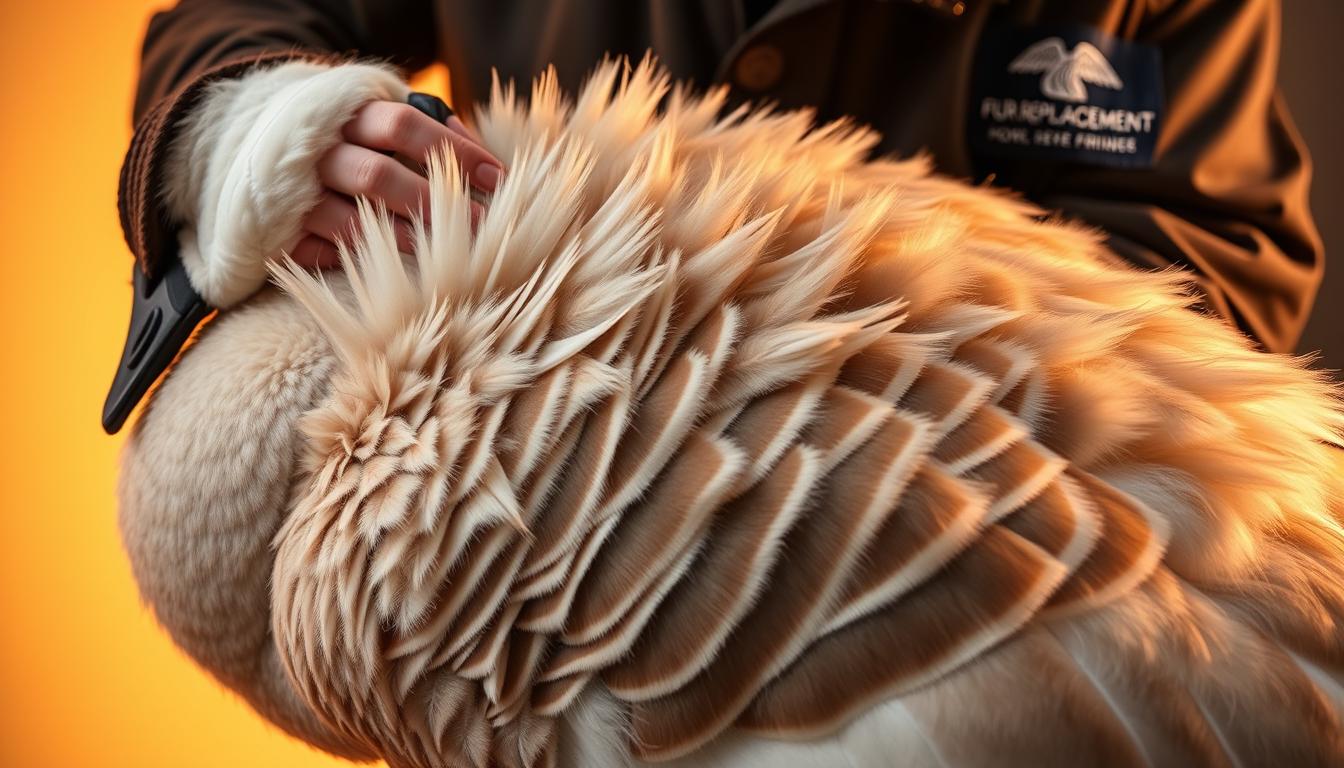
How to fluff Canada Goose fur without treating the whole jacket
Start with the hood trim itself. Fluffing the jacket's down filling and lifting flattened fur are separate tasks. A dryer instruction for the garment does not tell you how to treat the hair, hide or backing of its trim.
Read any instructions supplied with the trim, including those for a replacement fitted by a previous owner. If the material or permitted handling is unclear, ask its maker before choosing a brush or another tool. A familiar jacket name does not identify an aftermarket trim's material.
Check what has made the fur look flat
Look at the dry trim in good light. Notice whether the hair lies in one direction where it has been pressed, or whether strands are caught together. Check the backing and fastening too. A clean area flattened in storage needs a different decision from a sticky patch, a tight knot or a torn seam.
- If the trim is still wet, follow the checks for Canada Goose fur after rain before grooming it.
- If there is a stain or residue, use the fur-cleaning assessment to prepare a care enquiry.
- If hair is knotted together or comes away during handling, read what to check when Canada Goose fur gets matted.
A careful approach to a dry, flattened trim
- Release the hood from anything pressing on it, such as a tight garment bag or another coat. Inspect the trim before trying to change its shape.
- If the trim detaches, use its intended fastening and support the backing as you handle it. Leave a sewn attachment in place.
- Follow the trim maker's instructions for settling or grooming the hair. If brushing is permitted, use the specified tool and technique. A brush recommended for another material is not enough evidence.
- Stop if the tool catches, the backing pulls or hair comes away. Photograph the area and ask for an assessment instead of repeating the treatment.
Do not add water, conditioner or heat simply because the first attempt has not changed the appearance. There is no guaranteed brushing routine that restores every trim. The useful next question is whether the problem is compression, soiling, matting or damage.
Keep the trim from being compressed again
Canada Goose's storage guidance recommends room around the garment and, where possible, storing detached fur vertically. Its advice about refreshing down in a dryer applies to the garment with fur removed.
Check how the hood sits when the coat is put away. Keep heavy items off the trim and check its own storage instructions. Compare its condition before and after storage so you can describe any change when seeking help.
When fluffing is no longer the right task
A torn backing, missing section or damage that a specialist cannot repair may make replacement relevant. If that is the outcome of the assessment, check the material and attachment options on our Canada Goose fur trim replacement collar. Confirm the fit to your own hood before ordering.